Menu




| Country | Shipping method | Delivery time | Price | |
|
|
Airmail service Delivery | 14-21 days | 14.95$ | Tracking# available in 4 days |
| Trackable service Delivery | 9-14 days | 30$ | Tracking# available in 2 days |
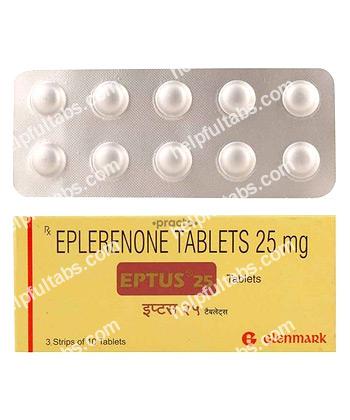
Eptus (eplerenone) is prescribed to treat high blood pressure and heart failure, especially following a heart attack. It works by blocking aldosterone, a hormone that can worsen heart damage.
Take Eptus exactly as directed by your physician, usually once daily with or without food. Your dosage may be adjusted based on your medical condition and kidney function.
Before starting Eptus, inform your doctor if you have kidney or liver disease, elevated potassium levels, or are taking other medications. Regular blood tests may be needed to monitor potassium and kidney function.
Do not use Eptus if you have severe kidney impairment, high potassium levels, or are using potassium supplements. It should also be avoided by individuals allergic to eplerenone.
Common side effects may include dizziness, fatigue, or increased potassium levels. In rare cases, serious electrolyte imbalances can occur.
Avoid combining Eptus with strong CYP3A4 inhibitors (e.g., ketoconazole) or other potassium‑sparing diuretics, as this may raise potassium levels. Always disclose all medications and supplements to your healthcare provider.
If you forget a dose, take it as soon as you remember. If it is almost time for your next dose, skip the missed one and continue with your regular schedule - do not double up.
Signs of overdose may include low blood pressure, dizziness, or dangerously high potassium levels. Seek emergency medical care immediately if an overdose is suspected.
Store Eptus at room temperature, away from moisture and heat. Keep the medication out of reach of children.
This information provides general guidance about Eptus and is not a substitute for professional medical advice. Always follow the instructions of your healthcare provider and consult them before making any changes to your medication regimen.


